Text and photo: David Harris
Mini Tins
When the Californian artist Matthew Betancourt moved into his new home in Sandviken, he found it provided little space for a studio, but his new neighbourhood provided an abundance of inspiration. He wanted to capture this historic neighbourhood in his paintings, a collection of picturesque streets, cobblestone alleyways, quaint houses and topsy-turvy rooftops.
...Read moreText and photo: David Harris
Mini Tins
When the Californian artist Matthew Betancourt moved into his new home in Sandviken, he found it provided little space for a studio, but his new neighbourhood provided an abundance of inspiration. He wanted to capture this historic neighbourhood in his paintings, a collection of picturesque streets, cobblestone alleyways, quaint houses and topsy-turvy rooftops.
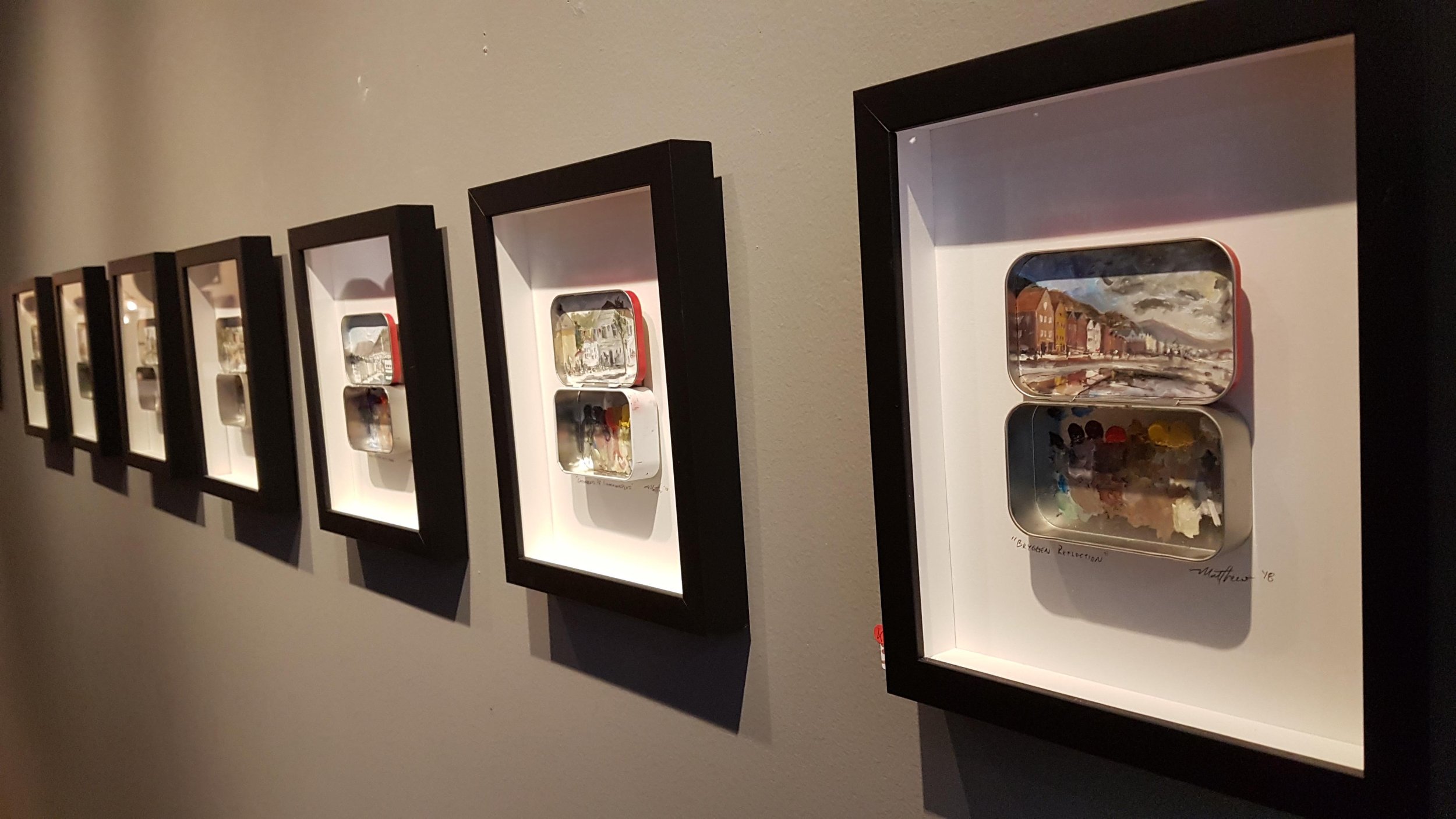
Having seen artists work in a similar vein, Matthew began using a metal tin for his plein-air paintings, capturing the places where he found most peace. Initially he would reuse the same tin for his paintings, after removing the finished oil painting and cleaning his makeshift palette. The tin simply served as a convenient palette and hand-held easel.
Matthew soon realised that the tin was an integral part of his artwork, a genuine record of his activity in each place he painted.
Each of the paintings is now created and presented in its original mini tin, complete with palette. Each tin is an artifact, the manifestation of the very moment the artist captured the scene, and each tin allows the viewer to connect with that same moment.
The gem-like tins are presented like artifacts in deep shadow frames, the anti-reflective glass allowing the viewer a clear view of their painterly realism. The artist’s palette is given equal worth and is presented as a painting in itself - an impressionist abstraction conveying the decisions the artist took at the moment of creation.
The tins invoke a feeling of nostalgia. There’s a sense that each tin has lived a previous life, first holding grandad’s mints, then a miscellany of nick nacks in some dusty cellar. Their simple engineering and honest physicality is a refreshing contrast to the digital age, and their timeless form correlates with the sentimentality of the cityscapes portrayed within them.
The artworks belong to a multitude of eras. The subject, medium and genre of the paintings is historic, and the painting style and tins emphasise this historicity. Yet the freshness and immediacy of the paintings, coupled with the meticulous precision of their presentation, contrasts this traditionality.
Betancourt’s artworks are honest, spontaneous, seem effortless and are also generous, despite their tiny size. The viewer is presented not only with a seductively vibrant cityscape, but is also invited to share in the intimate moment of its conception.