Text and photos: David Harris
ANN BEATE TEMPELHAUG AND EIRIK GJEDREM
at Kraft Gallery, Bergen until 4 August
Visiting Kraft Gallery’s latest exhibition, one could easily be forgiven for simply admiring Ann Beate Tempelhaug’s abstract works — paintings that give a nod to Turner and a wink to Monet — without realising the story behind their creation. Beneath their carefree, uplifting expressionism lies a more painful origin.
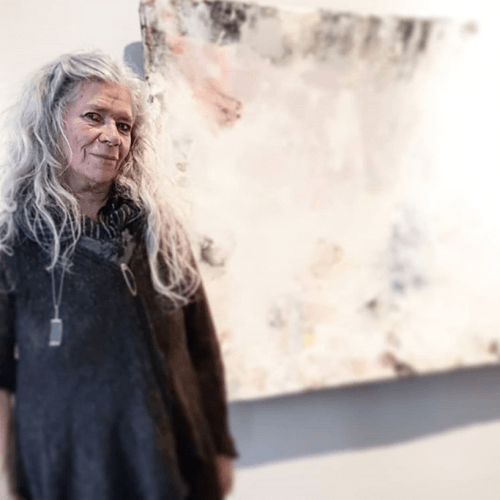
The artist tells me that ten years ago, while struggling with addiction and depression, she made a promise to herself: to create artworks larger than herself. She wanted to work on a scale that would strengthen her connection to her art — and to life itself. These works began as a life-support system.
...Read moreText and photos: David Harris
ANN BEATE TEMPELHAUG AND EIRIK GJEDREM
at Kraft Gallery, Bergen until 4 August
Visiting Kraft Gallery’s latest exhibition, one could easily be forgiven for simply admiring Ann Beate Tempelhaug’s abstract works — paintings that give a nod to Turner and a wink to Monet — without realising the story behind their creation. Beneath their carefree, uplifting expressionism lies a more painful origin.
The artist tells me that ten years ago, while struggling with addiction and depression, she made a promise to herself: to create artworks larger than herself. She wanted to work on a scale that would strengthen her connection to her art — and to life itself. These works began as a life-support system.
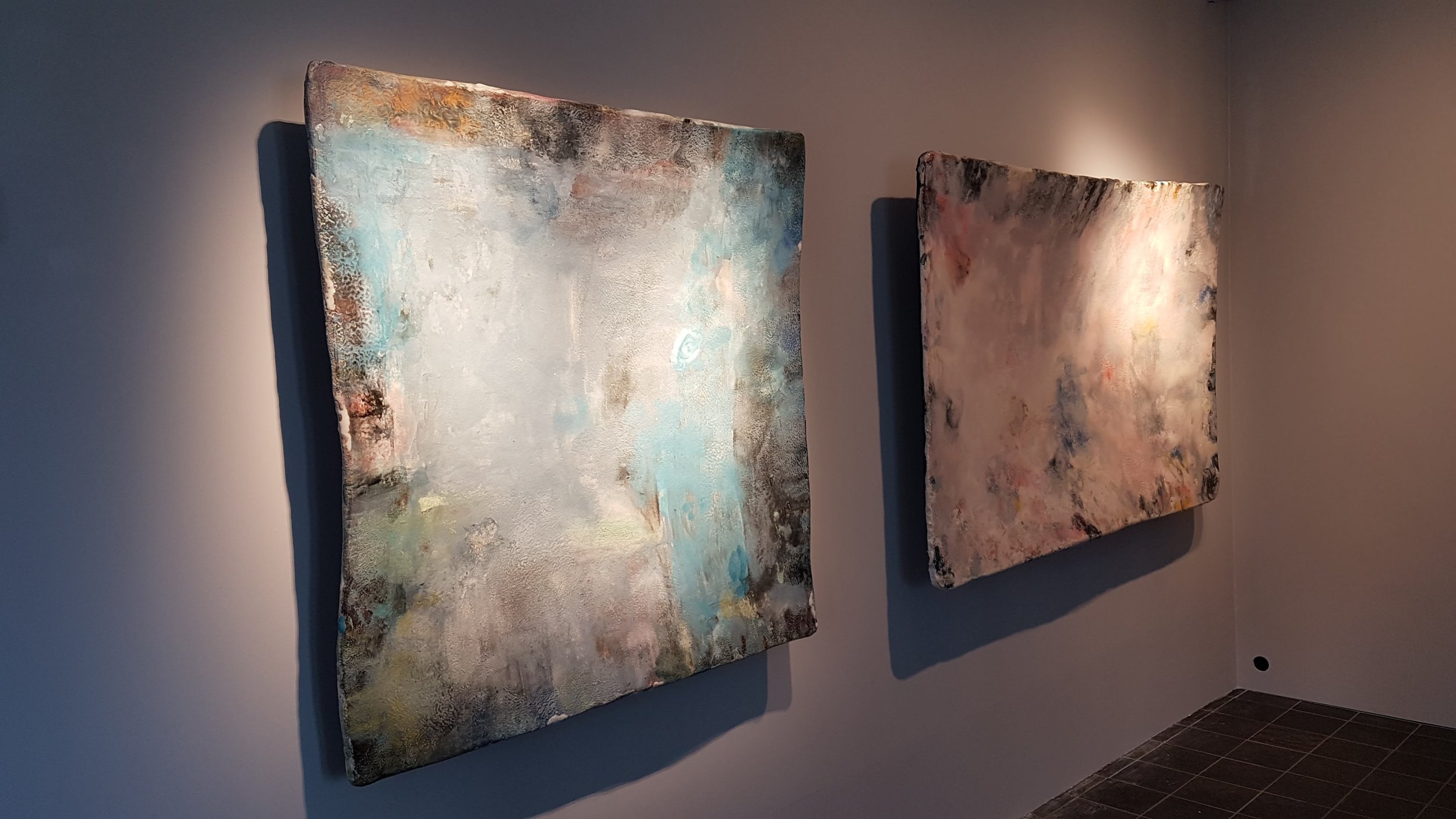
That promise has clearly been kept. The pieces on display are monumental in scale, especially considering their material. Each wall-mounted earthenware work weighs around 100 kilograms and measures nearly two metres in length. Installing them requires a small crane and considerable effort.
“I don’t see the works as paintings,” she tells me softly. They hang like paintings, yet are organic and sculptural, deeply connected to the language of ceramics. They resemble oversized plates or shallow, human-sized vessels — receptacles that invite both visual and tactile engagement. Their physicality seduces the viewer, and indeed the artist, as much as their floral, landscape-like imagery.
Her life-saving practice has produced extraordinary objects — however one chooses to categorise them — and the symbolism in their creation is equally compelling. The clay is not store-bought but locally excavated and delivered to the artist. She enriches this resurrected primordial earth with her own mixtures, lending it strength, pliability, and resilience.
Once nurtured, shaped, and strengthened, the clay endures days of firing and refiring, painting, drawing, scoring, and texturing. After this ritual of transformation — a process as intense as it is cathartic — the material emerges from the crematorial kiln, reborn as art: a new form rising from the ashes, ready to face the world.
Progress runs until 4 August.